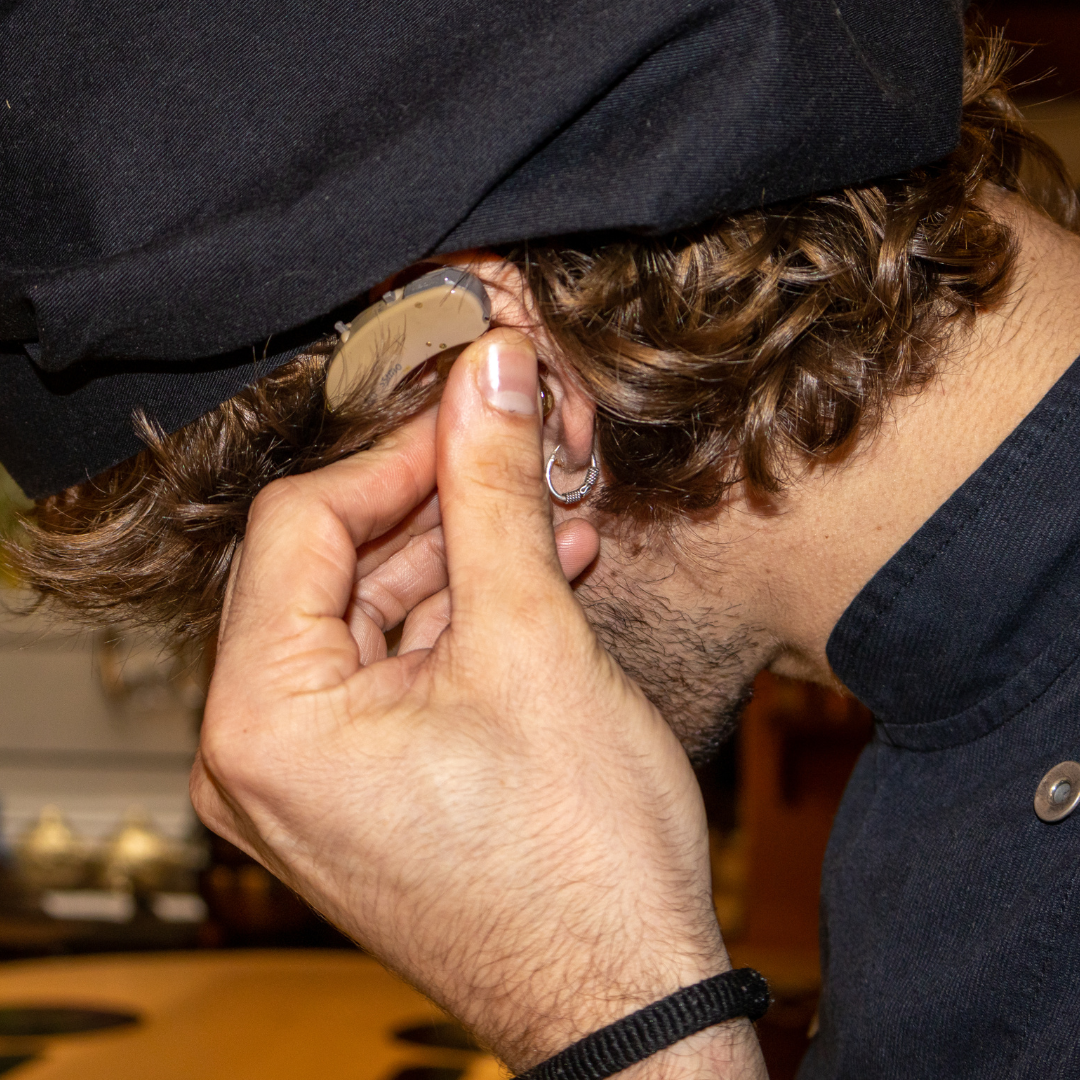
Tracking speech in busy dining venues can feel exhausting when environmental noise drowns out your hearing. Our audiology clinic conducts specialized testing to evaluate hearing in both quiet sound booths and noisy simulations to isolate the underlying cause. Once we determine the cause of difficult hearing, we can help you find personalized solutions.
How Can Hearing Seem Normal at Home but Fail in a Restaurant?
In quiet conditions, an optimal signal-to-noise ratio ensures that the desired speaker sounds markedly clearer than surrounding sound. Commercial restaurant spaces present the polar opposite acoustic dynamic. Multiple voices, music, kitchen noise, and reverberation overlap with speech, forcing the ears and brain to work harder to separate the person you want to hear.
These communication barriers frequently indicate high-frequency hearing loss, central auditory-processing disorders, or age-related sensorineural changes. Dim lighting, physical tiredness, conversational distance, and divided attention exacerbate these listening deficits. Certain patients demonstrate normal sensitivity on routine audiograms while struggling significantly during advanced speech-in-noise testing. Inability to track speech in crowded restaurants merits audiological evaluation even when standard daily hearing sounds completely normal.
Diagnosing High-Frequency Hearing Loss and Clarity Issues
The diagnostic workup opens with an extensive intake examining difficult listening environments, past noise trauma, tinnitus presence, family history, and medical history.
Clinical pure-tone audiometry identifies hearing threshold levels across various frequencies by delivering sounds through air and bone pathways. In high-frequency hearing loss, the audiogram reveals a sloping configuration where hearing acuity drops progressively as pitch frequencies increase. Extended test batteries incorporate acoustic tympanometry to rule out middle-ear pathology along with suprathreshold word-recognition testing.
Because testing in a silent booth does not mirror real-life restaurant environments, speech-in-noise testing supplies vital diagnostic clarity. This procedure gauges speech-discrimination accuracy while competing multi-source noise becomes incrementally louder. Interpreted together, these clinical scores demonstrate whether listening struggles originate from loss of audibility, speech clarity deficits, auditory processing delays, or combined elements.
How Do Auditory Processing Disorders Affect Hearing in Adults?
A diagnosed auditory processing disorder affects how the brain’s auditory cortex analyzes, organizes, and interprets sound. A patient’s ears may demonstrate normal pure-tone sensitivity, but their central processing system struggles to separate background babble, distinguish consonant sounds, or follow swift discussions. Our protocol begins by thoroughly testing peripheral hearing before determining if a specialized central auditory-processing battery or interdisciplinary referral is warranted.
Behavioral Strategies for Hearing Clearly in Loud Venues
Simple situational adjustments enhance the speech signal entering your ears and offer clearer facial cues. Before leaving home, identify quieter dining venues or plan to eat during less crowded service times. Dining locations utilizing sound-absorbing elements like booths, felt panels, window curtains, and carpet offer better acoustics than high-ceilinged rooms with hard surfaces.
Upon entering the restaurant:
- Request a table away from the kitchen, bar, speakers, and large groups.
- Choose a seat with your back against a solid wall to block acoustic clutter originating from behind.
- Face your conversation partners in good lighting.
- Keep conversational proximity as close as comfortably feasible to preserve acoustic signal strength.
- Angle your stronger-hearing ear toward the primary individual you wish to converse with.
- Prompt companions to rephrase unclear sentences with alternate terminology instead of repeating identical words.
- Confirm important details rather than pretending to understand.
- Excuse yourself for a momentary quiet pause when listening exhaustion starts to mount.
- Ask dinner guests to speak with clear enunciation at a steady, natural conversational rate.
- Raised or shouting voices warp acoustic phonetics and rarely improve speech intelligibility.
Modern Audiological Tools for Managing Background Noise
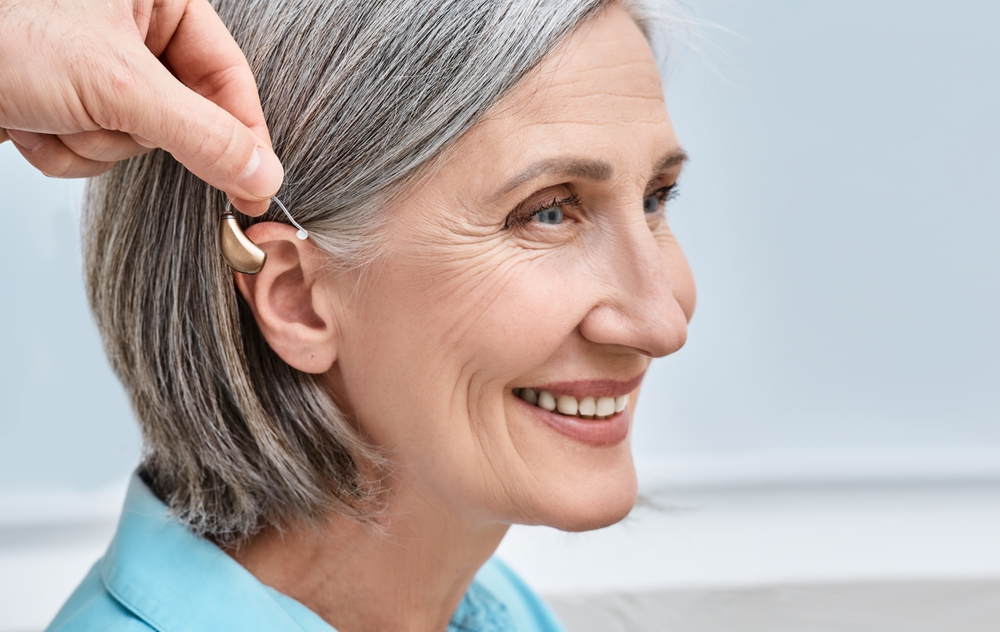
Selecting the ideal assistive technology depends upon underlying diagnosis, specific acoustic challenges, and verified hearing loss. Modern clinical hearing aids integrate directional microphone polar patterns, automated digital noise suppression, and personalized restaurant memory settings to highlight frontal speech and reduce background competition. Patients must uphold realistic expectations because modern amplification cannot strip out every ambient human voice completely.
Utilizing an external remote microphone can deliver a dramatically superior signal-to-noise ratio. Worn on the speaker’s collar or set on the table, the microphone broadcasts direct audio to paired hearing aids or specialized receivers. Direct audio routing minimizes the acoustic penalty of conversational distance and surrounding environmental din.
Further practical hearing technology options include:
- Multi-directional table microphones designed for small dinner gatherings
- Built-in telecoils linking directly with induction hearing-loop systems in public venues
- Mobile phone live-transcription apps offering real-time conversational subtitles
- Over-the-counter hearables equipped with directional speech-enhancement algorithms
- Sound-level meter applications and community-driven quiet dining guides
We evaluate these technological options, ensure full hardware compatibility, and instruct you on maximizing your selected system.
Professional Audiological Solutions for Loud Listening Environments
Undergoing a formal hearing evaluation takes your care beyond the limited baseline of hearing adequately in quiet spaces. Our clinicians review the specific environments, vocal pitches, and decibel levels that trigger breakdowns to design a personalized test protocol. Clinical evaluation commonly integrates pure-tone audiometric testing, middle-ear analysis, word recognition, and speech-in-noise measures. Auditory-processing testing may be considered when the history and initial results support it.
Abrupt auditory reductions, unilateral hearing shifts, or rapid functional deterioration require prompt assessment by an ear, nose, and throat physician. Personalized care identifies the source of the difficulty rather than assuming restaurant noise is the only problem.
Contact Us for a Hearing Evaluation Today
When dining out causes you to guess at words, detach from family, or experience severe listening exhaustion, book a comprehensive hearing evaluation with us. We provide proven treatments to enhance your hearing in noisy environments, offering hearing aid fine-tuning, specialized assistive accessories, and individualized auditory therapy.
Reach out to our audiology clinic today to schedule an evaluation and begin enjoying clear, effortless conversations.